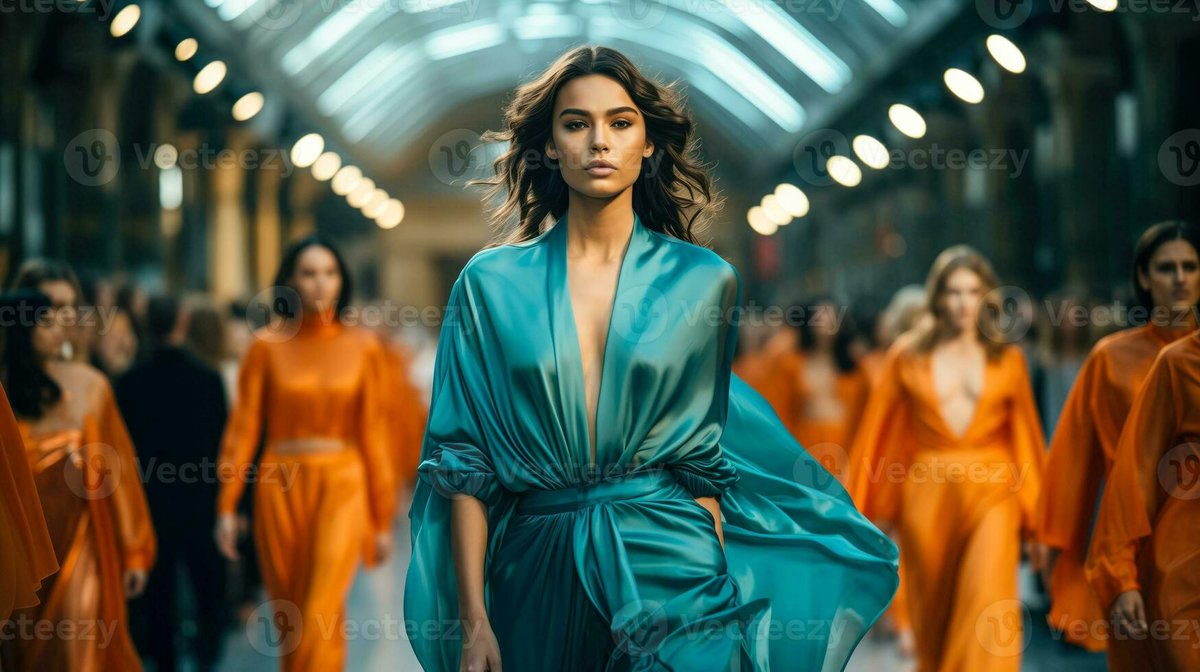
Imagine a world where your wardrobe understands you better than you understand yourself, anticipating your needs, reflecting your authentic style, and even suggesting outfits you never knew you needed. This isn't a futuristic fantasy; it's the rapidly unfolding reality of AI fashion and virtual styling. From democratizing hyper-personalized recommendations to revolutionizing sustainable practices, these cutting-edge technologies are not just trends – they're the new foundation of how we'll interact with clothes, discover new looks, and express ourselves. Welcome to the future of style, where artificial intelligence isn't just a tool; it's your most insightful fashion confidant.
At a Glance: What AI & Virtual Styling Mean for You
- Your Personal AI Stylist: Get 24/7, instant style advice tailored to your body, preferences, and mood, accessible right from your phone.
- Uncover Tomorrow's Trends Today: AI algorithms predict fashion trends before they even hit the mainstream, influencing what brands create and what you'll see in stores.
- Design Without Limits: AI helps designers generate unique prints, textures, and even entire collections, speeding up the creative process exponentially.
- Try Before You Buy, Virtually: Use Augmented Reality (AR) to virtually try on clothes and accessories, seeing how they look on you without leaving your home.
- Fashion That Cares for the Planet: AI optimizes supply chains, reduces waste, and helps brands produce more sustainably, making eco-conscious choices easier.
- Level Playing Field for Creators: Small brands and independent designers can leverage AI to generate designs, predict demand, and launch collections with minimal risk.
Your New Wardrobe Assistant: AI Stylists in Your Pocket
Gone are the days when personalized styling was a luxury reserved for the elite. Thanks to breakthroughs in AI, intelligent virtual assistants are now democratizing this experience, making tailored fashion advice accessible to everyone, everywhere. Think of it: a stylist operating 24/7, ready to offer advice through your mobile apps, favorite e-commerce sites, and social media platforms.
These aren't just fancy algorithms; they're sophisticated systems that dive deep into your unique style DNA. They analyze everything from your past purchases and browsing history to your body type, occasion needs, and even your current mood. The result? Real-time, bias-free, and scalable recommendations that truly resonate with you. It's particularly impactful for Gen Z, a generation raised on technology, who often prefer the immediacy and interactivity of AI for their everyday fashion choices. For them, AI isn't just a tool; it's a trusted partner in authentic self-expression. While human creativity remains paramount, AI complements it with unparalleled efficiency and precision, opening doors to new styles through machine learning that adapts to emerging trends, climate shifts, and your evolving personal data, enabling truly predictive styling.
Decoding Tomorrow's Trends: AI's Predictive Power
The fashion world has always been a notoriously fickle beast, with trends appearing and disappearing in the blink of an eye. But what if brands could see into the future, anticipating demand before it even materializes? AI-driven fashion trend forecasting is making this a reality.
Algorithms tirelessly scan billions of social media posts, search queries, and online reviews, picking up on the faintest signals of what’s next. This granular insight allows brands to predict market demand with unprecedented accuracy, refine their inventory management, and align production cycles perfectly. Small creators can tap into tools like Google Trends and even ChatGPT for accessible market insights, while giants like Adidas and Dior leverage advanced platforms for their extensive market analysis. This proactive approach not only helps brands stay relevant but also significantly reduces the guesswork, making fashion a more responsive and less wasteful industry.
From Concept to Closet: AI-Driven Design and Production
The design studio of the future looks very different. Here, AI isn't just an assistant; it's a co-creator, accelerating the design cycle from weeks to mere days. AI tools are generating innovative prints, intricate textures, and even entire collections based on vast datasets of trend and customer preferences. This automation frees designers from repetitive tasks, allowing them to focus on high-level creative vision and brand identity.
Platforms like ZMO.ai showcase this beautifully, generating high-quality, on-model imagery from a single product photo, completely bypassing the need for expensive and time-consuming physical photoshoots. This not only streamlines the production process but also dramatically lowers the barrier to entry for smaller brands and independent designers.
Your Style, Hyper-Personalized: Machine Learning in Action
At the heart of AI's revolution in fashion lies its ability to deliver truly personalized experiences. Machine learning powers sophisticated AI stylists and recommendation engines that learn from your every interaction. By analyzing customer feedback, purchasing patterns, and even your social media activity, these systems provide hyper-relevant suggestions that feel uncannily accurate.
Think of services like StitchFix, Zalando, or the rapidly expanding AI features on Shopify – they’re constantly learning what you love, what fits you best, and what styles will make you feel most confident. Whether you're looking for a complete wardrobe overhaul or just a new accessory to complete an outfit, AI can guide you. If you’re ever stuck for ideas or just want to play around, why not see what a little AI magic can do for your next look? You could even Try our outfit generator to spark some immediate inspiration. This level of personalized curation is reshaping how consumers shop and how brands connect with their audience.
Beyond the Individual: AI for Market & Niche Audiences
AI doesn't just understand individual preferences; it excels at deciphering the complex tapestry of market trends and niche audiences. By processing vast datasets encompassing demographics, geography, and behavioral patterns, AI can pinpoint specific market segments and even identify subtle regional style variations that human analysts might miss.
This granular understanding allows brands to craft highly personalized marketing messages and launch products that resonate deeply with specific audiences. Tools like Shopify Audiences and Google Analytics 4 empower businesses, large and small, to understand who their customers are, where they are, and what they truly desire, leading to more successful product launches and more efficient marketing spend. It moves brands beyond broad strokes to precision targeting, fostering stronger connections with diverse consumer groups.
The Virtual Dressing Room: Digital Try-Ons and Showrooms
One of the most exciting and consumer-facing developments is the advent of virtual try-ons and digital showrooms. Leveraging Augmented Reality (AR) and advanced AI-powered image recognition, you can now "try on" clothes, shoes, and accessories using your smartphone camera or an e-commerce app. Imagine seeing how a new pair of sneakers looks on your feet, or how a dress drapes on your body, all without stepping foot in a physical store.
Brands like Gucci and Farfetch are already leading the charge with AR experiences, allowing customers to visualize products in their own environments. Beyond individual try-ons, AI-generated models are providing diverse product representation without the logistical hurdles and costs of physical photoshoots. This not only enhances the customer experience by building confidence in online purchases but also significantly reduces return rates – a massive win for both consumers and retailers. The virtual showroom, where customers can browse entire collections in an immersive digital space, is also gaining traction, offering a compelling alternative to traditional retail.
Styling the Planet: AI for Sustainable Fashion
The fashion industry has a significant environmental footprint, but AI is emerging as a powerful ally in the push for sustainability. By providing real-time demand forecasting and optimizing supply chains, AI helps brands reduce waste and prevent overproduction. Imagine a world where clothes are produced only when and where they're genuinely needed, minimizing excess inventory that often ends up in landfills.
AI also contributes to sustainable pricing models, improves quality control throughout the production process, and enhances supply chain transparency, allowing consumers to make more informed, ethical choices. Companies like H&M, in partnership with Google Cloud, are using AI for inventory management and supply chain optimization, while Stella McCartney collaborates with Bolt Threads for sustainable material innovation powered by data. Even virtual prototyping tools like CLO Virtual Fashion are reducing the need for physical samples, significantly cutting down on material waste. AI is transforming sustainability from a buzzword into a measurable, actionable strategy for the fashion industry.
Empowering the Indie Creator: AI for Small Brands & POD
The rise of generative AI tools has been a game-changer for small creators and print-on-demand (POD) brands, leveling the playing field against larger competitors. Now, an individual designer with an idea can rapidly bring it to life with unprecedented ease.
Tools like Midjourney and Stable Diffusion enable the creation of unique visuals and patterns, while ChatGPT assists in crafting compelling product descriptions. Canva makes mockups a breeze, allowing creators to visualize their designs on various products. This suite of AI tools empowers independent creators to produce distinctive designs, predict emerging trends, and launch new collections quickly, all with minimal inventory risk. Platforms like Shopify or Etsy become their global storefronts, where their AI-assisted creations can reach a wide audience. It's a revolution that fosters creativity and entrepreneurship, proving that cutting-edge technology isn't just for big businesses.
The Ethical Runway: Navigating AI's Challenges
While the potential of AI in fashion is immense, it's crucial to address the ethical considerations and potential pitfalls that accompany such powerful technology. As with any transformative tool, responsible implementation is key.
IP and Copyright: Who Owns the AI's Vision?
One of the most pressing concerns revolves around intellectual property (IP) and copyright. When AI generates a design, who owns it? The programmer, the designer who provided the initial prompts, or the AI itself? The ambiguity surrounding ownership necessitates caution. Designers and brands must perform due diligence, employing tools like reverse image searches, to ensure that AI-generated content doesn't inadvertently infringe upon existing copyrighted works. Clear legal frameworks are still evolving, and staying informed is vital to navigate this complex landscape.
Bias and Inclusivity: Ensuring Fair Representation
AI models are only as good as the data they're trained on. If that data is limited or reflects existing societal biases, the AI's output can perpetuate and even amplify those biases. This is a significant concern in fashion, where AI models trained predominantly on data representing specific body types, cultures, or styles might overlook the vast diversity of human expression. To combat this, it's crucial for developers and brands to test AI-generated content rigorously against a wide range of models and audiences, ensuring that the outputs are truly inclusive and representative of a global consumer base. The goal is to create fashion that celebrates diversity, not restricts it.
Balancing Creativity with Automation: The Human Touch
Perhaps the most philosophical challenge is finding the right balance between AI's automation and human creativity. While AI can automate repetitive tasks and generate countless design variations, it should always complement, rather than replace, the unique vision and emotional depth that human designers bring to the table. AI serves best as an inspirer, a precision tool, and an efficiency enhancer, allowing human designers to infuse their unique brand identity, cultural understanding, and artistic flair into collections. The future of fashion lies in a synergistic partnership between human ingenuity and artificial intelligence.
AI in Action: Real-World Innovators
The transformative power of AI in fashion isn't just theoretical; it's being actively demonstrated by trailblazing companies across the globe.
- The Fabricant: Leading the charge in digital fashion, The Fabricant is the world's first fully digital fashion house. They create hyper-realistic virtual garments and experiences, showcasing a future where fashion can exist without physical form, reducing waste and opening new creative possibilities.
- H&M: The global retail giant has partnered with Google Cloud to leverage AI for optimizing its inventory management and supply chain. This collaboration helps H&M make more informed decisions about what to produce, how much, and where to distribute it, directly impacting their efficiency and sustainability efforts.
- Tribute Brand: Another notable player in the digital fashion space, Tribute Brand is a high-end digital fashion label creating garments that can be "worn" in photos and videos through advanced digital fitting technology. They exemplify how AI and virtual styling can create aspirational fashion that transcends physical limitations.
These examples highlight how AI is not just a concept but a practical, impactful force reshaping design, production, retail, and consumption in the fashion industry.
Your Next Style Frontier: Embracing AI's Evolution
The future of fashion is undeniably intertwined with artificial intelligence and virtual styling. From the moment a trend emerges to the personalized recommendations that land in your inbox, AI is already an integral part of how we experience clothes. It promises a world of hyper-personalized style, efficient design processes, and a more sustainable industry.
The key to navigating this exciting frontier isn't to resist it, but to embrace it. For consumers, this means being open to new ways of discovering and trying on clothes, and leveraging AI tools to refine your personal style. For designers and brands, it’s about understanding how AI can enhance creativity, optimize operations, and foster deeper connections with customers while staying mindful of ethical implications. The runway ahead is digital, data-driven, and intensely personal. Are you ready to step into it?