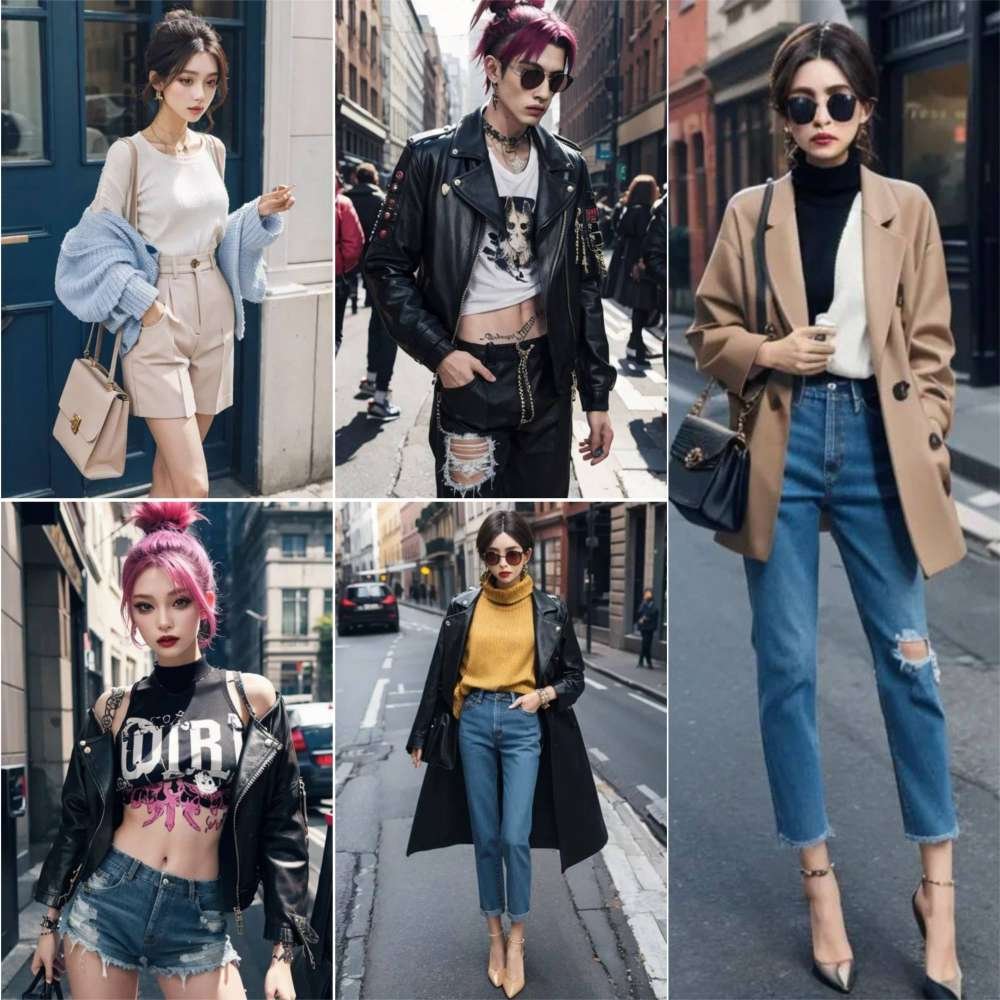
Every morning, the same question echoes in countless minds: "What should I wear?" It's a daily ritual of decision-making, weighing mood, weather, occasion, and an ever-evolving sense of personal style against the contents of your closet. For years, stylists, magazines, and well-meaning friends offered guidance. Now, something far more sophisticated is stepping into the role: the science behind outfit generation algorithms. These aren't just random suggestions; they're intelligent systems designed to learn, adapt, and even predict your sartorial desires, transforming the overwhelming task of getting dressed into a seamless, personalized experience.
Imagine a world where your wardrobe knows you better than you know yourself, offering perfectly curated ensembles for any situation. This isn't science fiction; it's the meticulous work of data scientists, fashion experts, and AI engineers converging to solve one of life's universal dilemmas.
At a Glance: Decoding Your Digital Wardrobe Assistant
- Algorithms aren't magic: They're sophisticated mathematical models and AI techniques, primarily machine learning and deep learning, trained on vast fashion datasets.
- They "see" your clothes: Computer vision allows algorithms to understand visual attributes like color, pattern, shape, and even fabric texture.
- They "know" your taste: Through your interactions (likes, skips, purchases) and explicit feedback, systems build a dynamic profile of your preferences.
- Context is key: Modern algorithms consider factors like weather, occasion, and current trends to make truly relevant suggestions.
- Adaptability is their superpower: The best systems continuously learn and evolve with your changing style, ensuring recommendations always feel fresh and personal.
- Beyond styling: This technology is reshaping how we shop, how brands design, and even how we think about sustainable fashion.
Beyond the Hanger: Why Outfit Generation Matters
For many, getting dressed is a creative outlet; for others, it’s a time sink. Modern life demands efficiency, and the "what to wear" conundrum can easily steal precious minutes from a busy schedule. This is where outfit generation algorithms truly shine. They offer more than just convenience; they offer liberation from decision fatigue.
Think about the sheer volume of choices. The average person’s wardrobe contains dozens, if not hundreds, of items. Manually combining these into cohesive, stylish, and appropriate outfits is a combinatorial nightmare. An algorithm, however, thrives on this complexity. It can rapidly evaluate millions of potential combinations, filtering them through the lens of your personal style, current trends, and real-world conditions.
This technological leap isn't just for consumers. For retailers, outfit generation enhances the shopping experience, driving sales by presenting complete looks rather than isolated items. For personal styling services, it augments human expertise, providing data-driven insights. Ultimately, it’s about making fashion more accessible, enjoyable, and tailored to the individual.
The Algorithmic Wardrobe Stylist: Core Concepts
At its heart, an outfit generation algorithm is a sophisticated recommendation system. Unlike algorithms suggesting movies or books, fashion recommendations face unique challenges: outfits aren't single items, but combinations of multiple items that must harmonize visually and contextually.
These systems leverage powerful subfields of Artificial Intelligence:
- Machine Learning (ML): This is the overarching discipline where computers learn from data without explicit programming. For outfit generation, ML models are trained on datasets of successful outfits, user preferences, and item attributes to identify patterns and make predictions.
- Deep Learning (DL): A subset of ML, deep learning uses multi-layered neural networks (like a simplified model of the human brain) to process complex data. DL is particularly adept at understanding intricate visual patterns in images of clothing and discerning subtle style nuances.
- Computer Vision (CV): This is what allows machines to "see" and interpret visual information. CV algorithms can identify specific garments, analyze their features, and even understand how different pieces interact visually within an outfit.
Imagine a digital personal shopper who tirelessly studies your past choices, analyzes the visual characteristics of every item in your closet, and then—with lightning speed—proposes new combinations. This is the promise of these algorithms.
Deconstructing the Digital Stylist: How Algorithms "See" Fashion
Before an algorithm can suggest an outfit, it needs to understand the individual pieces. This is where computer vision plays a starring role.
Computer Vision: The Eyes of the Algorithm
Computer vision acts as the primary sensory input for outfit generation systems. It processes images of clothing items and extracts meaningful data.
- Feature Extraction: This involves identifying distinct visual characteristics of each garment. Think of it as breaking down a piece of clothing into its core attributes:
- Color Palettes: Dominant colors, complementary colors, patterns.
- Patterns and Prints: Stripes, polka dots, floral, abstract designs.
- Silhouettes and Shapes: A-line skirt, slim-fit jeans, oversized sweater, structured blazer.
- Fabric Textures: Smooth silk, rough denim, chunky knit, delicate lace.
- Style Elements: Collars, sleeve types, embellishments, hardware.
- Object Detection and Segmentation: Advanced CV models can not only identify a shirt in an image but also isolate it from the background and other objects. This allows the algorithm to understand what is the shirt, separate from the model wearing it or other background elements.
- Contextual Understanding: Beyond individual features, algorithms can learn to categorize items based on their implied use or style. Is that a formal dress or a casual sundress? Are those sneakers for running or fashion? This is often achieved by training models on large, labeled datasets where items are tagged with their style, occasion, and season.
Natural Language Processing (NLP): Understanding Your Vibe
While computer vision handles the visual, Natural Language Processing helps algorithms understand the textual side of fashion. This includes:
- Processing product descriptions: Extracting keywords like "casual," "bohemian," "elegant," "sporty."
- Analyzing user reviews and feedback: Understanding sentiment and specific preferences expressed in text.
- Interpreting trend reports and fashion articles: Learning the language of current styles and aesthetics.
By combining CV and NLP, algorithms create a rich, multi-dimensional understanding of each garment and, crucially, how you describe and perceive your own style.
The Brains Behind the Bling: Recommendation System Paradigms
Once individual items are understood, the algorithm needs a strategy to combine them. This is where different recommendation system approaches come into play.
Content-Based Filtering: "If You Liked This, You'll Like That."
This approach focuses on the inherent characteristics (content) of items you've previously liked or interacted with. If you often wear floral-print midi skirts, a content-based system might recommend a new floral-print midi dress or a blouse with similar color patterns.
- How it works: It builds a profile of your preferences based on the attributes of items you've engaged with. Then, it recommends new items that share those attributes.
- Strengths: Excellent for personalized suggestions based on explicit preferences, works well even with unique tastes.
- Challenges: Can lead to "filter bubbles," where you're only shown what's similar to what you already like, potentially limiting discovery.
Collaborative Filtering: "People Like You Also Liked This."
Instead of focusing on item attributes, collaborative filtering leverages the behavior of other users.
- User-User Collaborative Filtering: Finds users with similar taste profiles to yours and recommends items they have liked but you haven't seen.
- Item-Item Collaborative Filtering: If you liked Item A, it looks for other items that are frequently liked or purchased by users who also liked Item A.
- Strengths: Great for discovering new and unexpected items, less prone to filter bubbles than pure content-based systems.
- Challenges: Suffers from the "cold start problem" (difficulty recommending for new users or new items with no interaction data) and can be influenced by popular trends rather than niche tastes.
Hybrid Approaches: The Best of Both Worlds
Most modern outfit generation systems employ hybrid approaches, combining content-based and collaborative filtering to overcome individual limitations and provide more robust, accurate, and diverse recommendations.
This is precisely the strength highlighted in recent research, such as the "Adaptable Recommendation System for Outfit Selection with Deep Learning Approach" (ScienceDirect). This study emphasizes that effective systems don't just recommend; they adapt. They propose a system with two phases:
- Short-term memory: Constantly updated with a user's recent interactions (e.g., what you browsed or saved yesterday). This captures your fleeting interests or specific needs for an upcoming event.
- Long-term memory: Built on Deep Neural Networks (DNNs) that learn your stable, overarching style preferences over time. This captures the essence of your personal aesthetic.
This combination allows the system to be both responsive to immediate needs and consistent with your enduring style, addressing the crucial "outfit-user relationship" that traditional systems often miss. Through stages like a "Database Generator" (encoding visual characteristics), a "Model Ranking" (scoring recommendations), and "implicit profiling" (updating rankings based on preferences), these systems demonstrate impressive adaptation capabilities through human-machine interaction. They learn to adjust to your preferences, offering outfits similar to your previous selections, truly making them yours.
Learning Your Style: The Adaptive Edge of Modern Algorithms
The real magic happens when these algorithms move beyond static rules and start actively learning from you. This continuous feedback loop is what makes them truly adaptive and personalized.
Implicit Feedback: Actions Speak Louder Than Words
You might not even realize it, but every interaction you have with a fashion app or e-commerce site is a data point the algorithm uses to refine its understanding of your style.
- Clicks and Views: What items do you spend time looking at?
- Saves and Wishlists: What do you explicitly signal interest in?
- Purchases: The ultimate sign of approval.
- Skips and Ignored Items: Equally important, these tell the algorithm what you don't like.
- Returns: A powerful negative signal, indicating an item didn't meet expectations or didn't fit your style.
This "implicit profiling," as some research calls it, allows the algorithm to update its ranking models constantly. It observes your digital body language to infer your taste, even if you don't articulate it.
Explicit Feedback: Your Direct Input
While implicit feedback is powerful, direct input is invaluable. Many apps incorporate features like:
- Likes/Dislikes: Simple binary choices to quickly curate your feed.
- Style Quizzes: Questions about your preferred aesthetics, colors, occasions, and body shape.
- Direct Ratings: Scoring outfits or individual items.
- Wardrobe Uploads: Allowing the algorithm to scan your existing clothes to understand your current inventory and style.
The balance between implicit and explicit feedback allows algorithms to build a comprehensive, dynamic profile that evolves as your style does.
Deep Neural Networks (DNNs) and Personalization
Deep Neural Networks are the powerhouses behind this advanced personalization. They can:
- Process complex, non-linear relationships: Unlike simpler algorithms, DNNs can understand the subtle interplay between multiple garment attributes and user preferences. For example, they can grasp that while you like floral patterns, you only like them on flowy dresses, not structured blazers.
- Handle high-dimensional data: Fashion data is rich and complex (images, text, user interactions). DNNs excel at processing these vast amounts of diverse information.
- Learn from continuous interaction: The multi-layered structure of DNNs allows them to continually adjust their internal parameters as new data (your interactions) comes in. This is the mechanism behind the "short-term" and "long-term" memory discussed earlier, allowing algorithms to learn and adapt to your preferences through human-machine interactions.
This deep learning capability is what enables an AI personal stylist to move beyond basic matching and truly understand the nuances of your unique aesthetic.
Beyond the Basics: Advanced Considerations in Outfit Generation
The sophistication of these algorithms extends far beyond simple item matching. They integrate a host of additional factors to provide truly intelligent suggestions.
Contextual Awareness: More Than Just Clothes
An outfit isn't just about garments; it's about when and where they're worn. Advanced algorithms incorporate external data sources to add critical context:
- Weather Data: Integrating local weather forecasts to suggest appropriate clothing (e.g., rain gear, warm layers, light fabrics).
- Occasion Tags: Understanding if an event is formal, casual, business, or party, and suggesting suitable attire.
- Location Awareness: Considering local fashion norms or specific events happening nearby.
- Time of Day: Recommending daywear versus evening wear.
Integrating this contextual data allows for incredibly practical and relevant outfit suggestions, ensuring you're not recommended a wool coat on a hot summer day.
Trend Prediction: Staying Ahead of the Curve
Fashion is dynamic, with trends constantly emerging, evolving, and fading. Modern outfit generation algorithms don't just react; they predict.
- Social Media Analysis: Monitoring platforms like Instagram, TikTok, and Pinterest for emerging styles, popular influencers, and trending hashtags.
- Fashion Publications and Blogs: Scraping data from industry sources to identify designers, collections, and themes gaining traction.
- Sales Data and Search Queries: Analyzing what items are selling well and what people are searching for.
By analyzing these diverse data streams, algorithms can anticipate future trends, ensuring that their recommendations feel fresh and current. This is a prime example of how fashion trends are analyzed by data, allowing systems to keep your digital wardrobe in sync with the real world.
Diversity vs. Relevance: The Balancing Act
One challenge for any recommendation system is balancing relevance (giving you what you'll definitely like) with diversity (introducing you to new things). If an algorithm only shows you slight variations of what you already own, it can create a "filter bubble," stifling creativity and discovery.
Sophisticated algorithms employ strategies to ensure diversity:
- Exploration-Exploitation Trade-off: Periodically introducing slightly different styles or items to see how you react, rather than always "exploiting" your known preferences.
- Serendipity: Designing algorithms to occasionally present unexpected but potentially delightful combinations.
- Negative Sampling: Learning from items you don't like to avoid similar suggestions, while still keeping options open.
This balance is crucial for a truly inspiring styling experience, allowing you to discover new facets of your style.
Ethical AI in Fashion: Bias and Representation
As powerful as these algorithms are, they are only as good as the data they're trained on. If training data disproportionately features certain body types, skin tones, or styles, the algorithm can inadvertently perpetuate biases.
- Addressing Bias: Researchers and developers are actively working to curate more diverse and representative datasets. This involves ensuring images cover a wide range of human diversity and that style classifications are inclusive.
- Transparency: Making algorithms more transparent helps identify and mitigate potential biases, ensuring recommendations are fair and equitable.
- Inclusivity: The goal is for outfit generation to be a tool for everyone, offering personalized advice that celebrates individual style without imposing narrow ideals.
Bringing It All Together: What This Means for You
So, what does all this sophisticated science mean for your daily routine and your shopping habits? It means a more intuitive, less stressful, and potentially more adventurous fashion journey.
- Smarter Wardrobe Management: Many apps allow you to upload your existing wardrobe, turning your closet into a searchable database. The algorithm can then suggest new combinations from your own clothes, identify gaps, or even help you pack for a trip.
- Personalized Shopping: Instead of sifting through endless online catalogs, you receive highly curated suggestions tailored to your style, body shape, and budget. This can range from individual item recommendations to complete outfits that you can purchase directly.
- Reduced Decision Fatigue: Imagine waking up, checking an app, and having a perfectly styled outfit ready to go, complete with accessories, considering the weather and your day's schedule. This saves time and mental energy.
- Style Discovery: Algorithms can introduce you to new brands, styles, or combinations you might not have considered, gently pushing you out of your comfort zone in a relevant way. This could even extend to virtual try-on experiences that let you see how clothes look on you without ever stepping foot in a store.
- Enhanced Virtual Styling: Whether you're using a dedicated app or interacting with an e-commerce platform's recommendation engine, understanding the science behind outfit generation algorithms empowers you to give better feedback. The more you interact, the smarter it gets. If you're looking for quick inspiration, you can even Get random outfit ideas as a starting point, and then let your feedback guide the algorithm towards more tailored suggestions.
To make the most of these systems, engage with them actively. Provide feedback, save what you like, discard what you don't, and even upload photos of outfits you love. The more data you provide, the better your digital stylist becomes.
The Future of Your Wardrobe: Smarter, Sustainable, Seamless
The journey of outfit generation algorithms is far from over. The future promises even more integrated and intelligent experiences:
- Hyper-Personalization: Imagine an algorithm that not only knows your style but also your preferred fit for different garments, or even your mood on a given day, adjusting recommendations accordingly.
- Integration with Smart Devices: Your smart mirror could suggest outfits based on your calendar, current weather, and wardrobe contents, or even overlay virtual try-on experiences seamlessly.
- Sustainability Focus: Algorithms can help us make more sustainable fashion choices by suggesting how to re-wear existing items in new ways, identify ethically sourced brands, or even forecast the lifespan of garments. This is part of a broader trend where technology aiding sustainable fashion is making significant strides. By optimizing choices and encouraging mindful consumption, these systems can reduce fashion waste.
- Generative AI for Design: Beyond recommending existing clothes, AI could eventually design entirely new garments based on your preferences, leading to truly bespoke fashion.
The goal isn't to replace human creativity or the joy of fashion, but to enhance it. These algorithms are tools, powerful ones, that can streamline the mundane, inspire the uninspired, and empower us all to express ourselves more fully through our style.
Styling Your Journey with AI: A Final Thought
Outfit generation algorithms represent a profound shift in how we interact with our wardrobes and the wider fashion world. They transform the abstract concept of "style" into data points, patterns, and predictions, making personalized fashion accessible to everyone. By understanding the underlying science—the computer vision that sees, the deep learning that learns, and the recommendation systems that suggest—you gain a clearer picture of how your digital stylist works its magic.
So, next time you effortlessly pull together a fantastic outfit, take a moment to appreciate the invisible algorithms working tirelessly behind the scenes, continually adapting to ensure your style always shines. They’re not just choosing clothes; they’re helping you tell your story.